Campaign Strategy & Performance Optimization for Jaguar
Turning a failing luxury launch into 75% sales growth and 16:1 ROI
My role: Lead Copywriter Strategist & Concept Author
Chapter 1: The launch
The year is 2019. The Jaguar I-PACE is about to launch in Brazil.
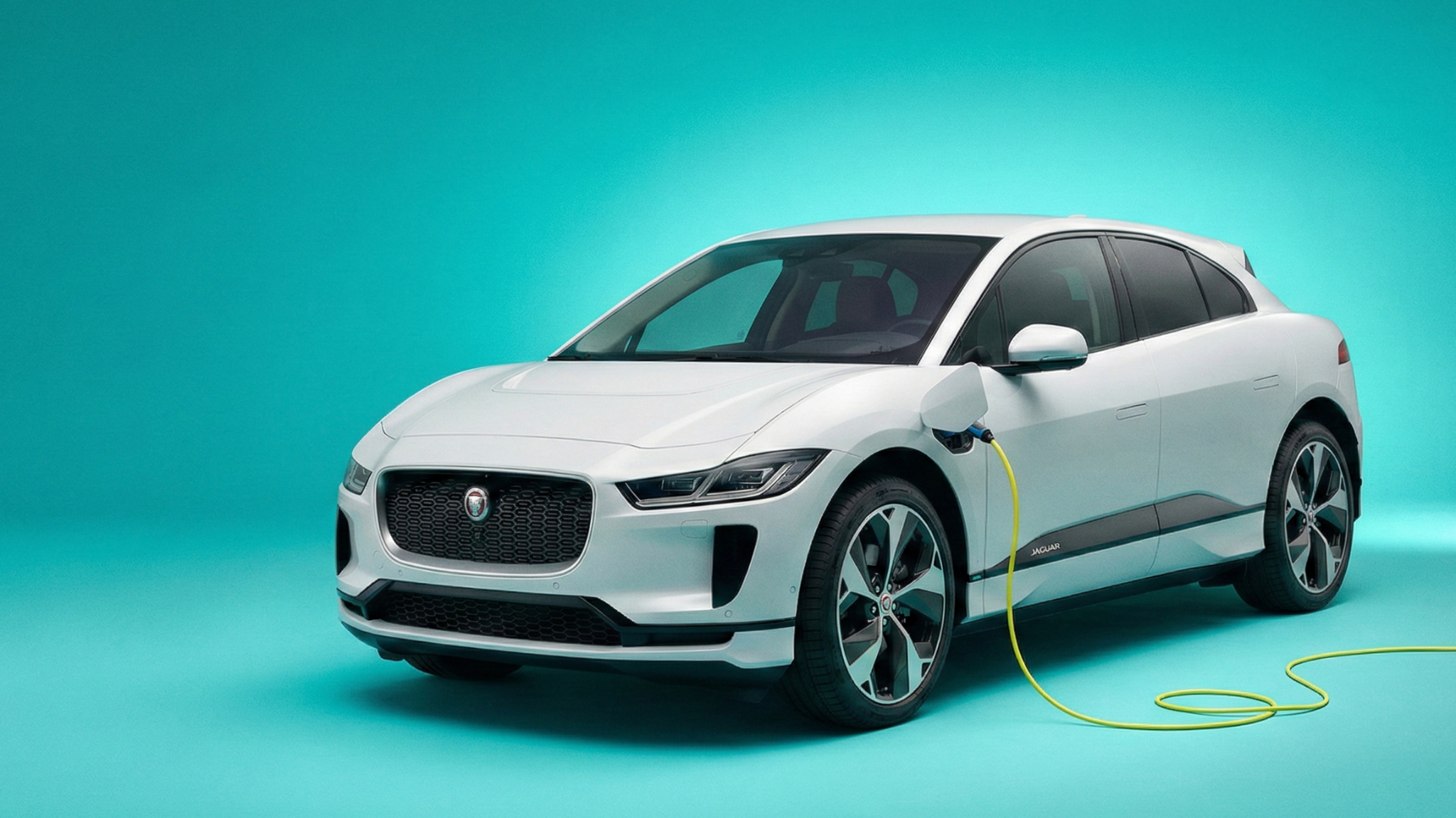
Tesla owned the EV conversation. Audi had just announced the e-tron. BMW was teasing the iX3. And Jaguar — historically known for roaring engines and British leather — was about to introduce Brazil's first all-electric luxury SUV.
The briefing was clear: make noise. The budget matched that ambition — high-end video, interactive formats, top-tier media placements. The kind of launch you'd expect for a car priced at around BRL 500,000 — roughly USD 100,000 at the time.
In a market where EVs represented less than 1% of car sales. In a country where "charging infrastructure" still meant hoping to find a spare outlet near your parking spot. We were selling to early adopters — people who didn't want to wait for the future. They wanted to show it was already here.
Insight + Execution
The I-PACE had just won the 2019 World Car of the Year. It wasn't a concept. It wasn't a promise. It was here — on the road, winning awards, outperforming expectations.
So how do you launch an electric car from a brand not known for electric cars? You don't position it as the future. You position it as proof the future already happened.
"Some try to predict the future. We created it."
That became our concept — not aspirational, but declarative. Not "we're coming." We arrived.
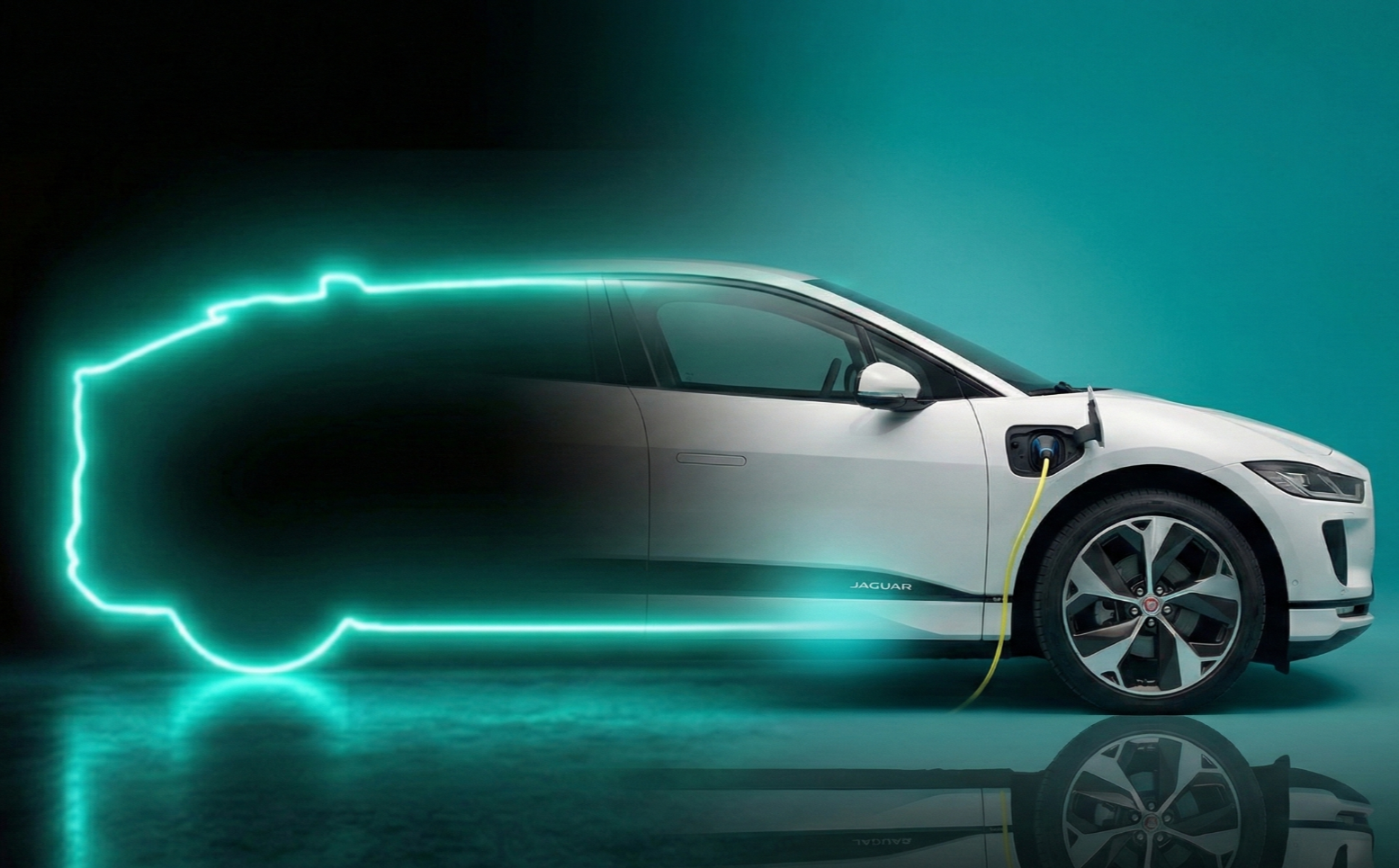
The visual language followed: electric light as a metaphor for invisibility made visible. A silhouette in darkness. A neon outline, glowing cyan, tracing the I-PACE's shape. Glowing. Inevitable.
High production value. Premium aesthetic. Clear message.
"Don't try to predict the future. We already created it for you. New Jaguar I-PACE: the first 100% electric Jaguar SUV."
Chapter 2: When beautiful creative isn't enough
What the numbers weren't telling
Millions of impressions. High engagement.
Positive brand lift. Low conversions.
The gap was obvious, but the reason wasn't—until we started listening.
We ran a structured survey across 11 lost leads in 4 dealerships. Different cities, different backgrounds, same three questions coming up over and over: "How far can it go?", "Where do I charge it?", "Does it perform like a real Jaguar?".
The pattern: people wanted the I-PACE. They just didn't trust the ecosystem.
Desire and conversion are different battles
We'd created desire—that part worked.
But BRL 500k is a lot to spend on unfamiliar technology, in a country where charging infrastructure was still uncertain, from a heritage brand not yet associated
with innovation.
The real barrier wasn't aspirational. It was practical. We'd made the I-PACE look like the future. We hadn't explained how the future would work in people's garages, routines, and daily lives.
We'd built aspiration. We hadn't built confidence. That insight reshaped everything that came next.
So we killed the neon and started answering questions.
Chapter 3: The pivot
As beautiful doesn't pay the bills, we needed to shift from inspiration to education.
If the barrier was fear of the unknown, the answer wasn't more aspiration. It was normalization.
The new concept I developed: "Your world is electric. You know it."
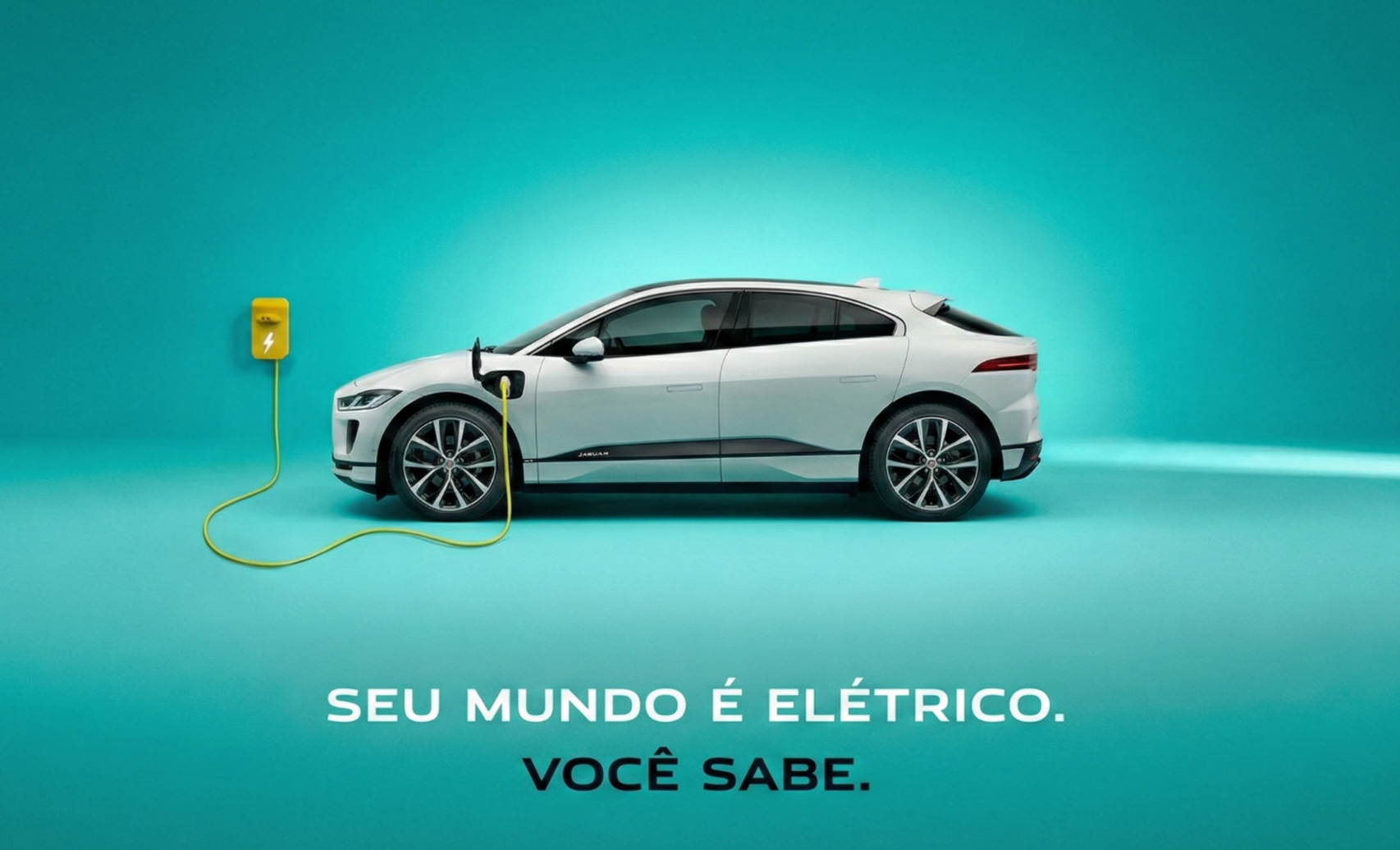
Your phone. Your cooktop. Your bike.
Electricity is already everywhere in your life— it's not complicated, it's normal.
An electric car isn't a leap into the unknown. It's the logical next step.
This reframe did two things simultaneously:
1. Made EVs feel familiar, not futuristic.
2. Positioned the I-PACE as the natural evolution, not a gamble.
Budget reality
Most of the budget had gone to the launch. What remained had to deliver — guaranteed. Zero tolerance for waste.
So we focused on three executional pillars:
1. Short motion pieces that answered objections fast.
2. Hyper-targeted remarketing to people who'd already engaged.
3. Email nurture sequences we could control completely.
Every asset had one job: answer a specific question.
Chapter 4: Building confidence
A 3-Phase Funnel Designed to Move People from "I Want This" to "I Can Own This".
Awareness
Normalize Electric
- Key Copy
- "A cooktop. Your phone. A bike. Your car. Your world is electric. You know it."
Consideration
Answering the Big 3
- Autonomy
- "To the beach. To the mountains. To the countryside. The I-PACE has a 470km range – enough to go anywhere."
- Performance
- "0-100 km/h in 4.8 seconds. Instant torque. 400 HP. Still a Jaguar."
- Charging
- "Home chargers. Public stations. Easier than you think."
Exploration
Retargeting & Conversion
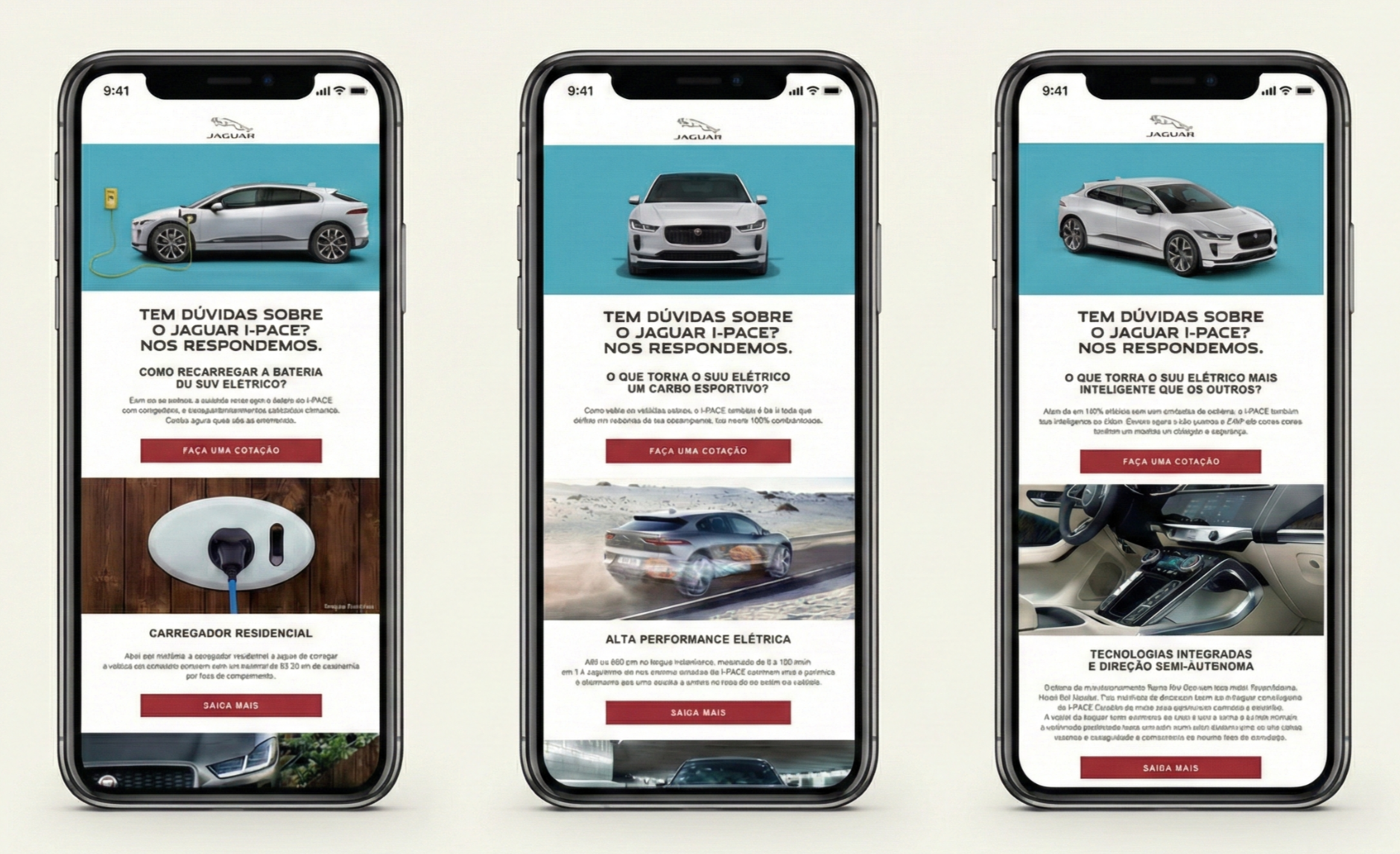
2. Long-form nurture emails with FAQs, owner testimonials, and charging maps.
2. CTA language shifted from high-pressure "Buy now" to low-friction "Request a quote" — reducing the perceived commitment of the first step.
Chapter 5: The numbers
When strategy meets execution
The Philosophy: Not to push, but to guide.
Make it feel normal
"A cooktop. Your phone. A bike. Your car. Your world is electric. You know it."
Answer their doubts
"Wondering where you can go with your Jaguar I-PACE on a single charge? The beach. The mountains. The countryside. The I-PACE has a 470km range."
Let them explore
HAVE QUESTIONS ABOUT THE
JAGUAR I-PACE? WE HAVE THE ANSWERS.
At home or on the road, it is possible to recharge the battery of the I-PACE with peace of mind. Check the alternatives below.
Request a quoteHOME CHARGING
Capable of fully charging the vehicle overnight, providing up to 35 km of range per hour of charging.
Learn moreInteractive email sequence sample designed to educate potential customers on the practical benefits of the electric transition, focusing on charging, performance, and technology.
Reach
Total campaign period
Unique users
And the numbers that actually mattered:
Honesty time
This wasn't a case about perfect strategy. It was a case about strategic adaptation.
We launched with confidence. We listened when it didn't work. We pivoted fast.
Learnings
Start with listening,
not assuming.
We could've run the lost-lead research before the launch, not after. Testing messaging with real prospects against real objections would have saved budget and shortened the learning curve significantly.
Test educational
content in parallel from day one.
Instead of launching pure aspiration, we could've A/B tested "inspiration vs. education" from the beginning to establish early which approach converted better — rather than discovering it through underperformance.
Build a modular
creative library upfront.
The pivot forced us to create new assets quickly under budget pressure. If we'd built a content library of FAQs and objection-handlers during pre-production, we'd have pivoted faster and with higher creative quality.
The best campaigns aren't the ones that never fail.
They're the ones built by people who know how to fail forward — and have the data to prove they did.
What the numbers don't tell
The market: EVs represented <1% of car sales in Brazil at the time.
The price: R$500k — roughly 6x the average new car in the country.
The competition: Tesla, Audi, BMW — all entering or already in market.
The infrastructure: Charging stations were still rare. Range anxiety was real.
We weren't selling an upgrade. We were selling a leap of faith—and making it feel safe enough to take. ⚡
Good campaigns are collaborative by nature. This one worked because the team trusted the research, killed their darlings, and rebuilt fast.
Grateful to everyone who made this happen.
Spark44 Agency: Thibault Plantet, Luis Felipe Feresin Ferreira,
Mayara
Prado, Leticia Thenard, Jonas Octaviano, Renata Losso,
Rafael Voltolino, Mike Ribeiro, Paulo Torres, Gustavo Barauna,
Paulino
Cassiano, Christian Nigmann
Motion Design: Kenji Watanabe
Client: Jaguar Land Rover
Product: Jaguar I-PACE